
THANK YOU FOR SUBSCRIBING
× 
Construction Tech Review Weekly Brief
Be first to read the latest tech news, Industry Leader's Insights, and CIO interviews of medium and large enterprises exclusively from Construction Tech Review

Alaya Capita
Luis Bermejo, Co-founder & Managing Partner
Investors Who See with Sustainability's Eyes
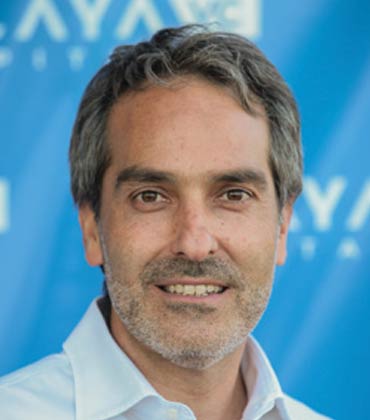
Luis Bermejo
We understand that the companies operate in a broader context and have an impact on the communities where they are active. However, we cannot leave the mission of reconstructing the world in the impact startups’ hands. We should consider sustainability in business activity as a responsibility of very actor of the ecosystem.
From the beginning, we have observed that startups are generally created with an impact purpose, which is driven by the motivation of solving problems through technology. Thus, for the startups, it is more naturally presented the idea of thinking of an “impact purpose”. One of the most commonly used theoretical frameworks to understand the impact are the UN Sustainable Development Goals, where startups can find how their innovations impact on the protection of the environment or on people’s life quality in the medium and long term.
For example, Betterly is the first social unicorn in Latin America, a platform that delivers benefits and Life Insurance, free of charge for companies’ workers. Up to now, they have delivered 400 million dollars on financial coverage for 30,000 team members of 205 companies.
In this way, they help achieve the SDG 8, which seeks to protect the labor rights and promote a safe and secure working environment for all workers and the SDG 10, which seeks to reduce inequality and to adopt mainly fiscal, wage, and social safety policies in order to progressively reach equality.
"While it has been long talked about impact startups and good sustainability practices, we currently have the responsibility as investors to use these criteria as a way to evaluate their investments. The effects caused by the pandemic, the social gaps and the climate crisis clearly show that companies of the future should consider this scenario and hopefully, be part of the change "
But the debate has been expanded and the world of startups has taken a concept which has been in the corporate world for years: the ESG principles (environmental, social & governance). They refer to the way companies’ practices influence the environment, society and the organization’s transparency, considering their relationship with every actor with which they interact (clients, workers, suppliers, investors, etc.) Thus, we can say that we have taken one step forward as regards the debate over the sustainability of startups. We no longer ask them to change the world just with technology, but also with responsibility and making sure to have good practices in the three ESG dimensions.
But, why did it take so long for this concept to arrive? Because it was believed that startups had a small structure and that their ESG impact would not be of much importance.
The articles from these contributors are based on their personal expertise and viewpoints, and do not necessarily reflect the opinions of their employers or affiliated organizations.
Top
