
THANK YOU FOR SUBSCRIBING
× 
Construction Tech Review Weekly Brief
Be first to read the latest tech news, Industry Leader's Insights, and CIO interviews of medium and large enterprises exclusively from Construction Tech Review

Blackhorn Ventures
Micah Kotch, Partner
Climate Resilient Cities and the New Era of Urban Infrastructure
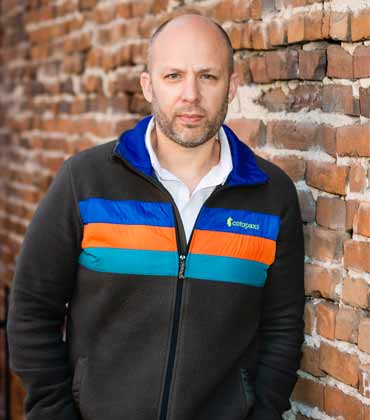
Micah Kotch
As the largest city in North America, New York City represents the opportunity and staggering risk of a metropolitan area of 19 million people running on 20th century infrastructure. From the advent of technologies like elevators and subways to policies like PlaNYC and Local Law 97, New York has long been a beacon for urban innovation. With more than 500 million sq ft of commercial office space in NYC (all reliant on fossil fuels or Con Edison’s steam system) how can the real estate and construction industry decarbonize at scale, implement solutions that perform over the next 20+ years, and recapitalize our architectural fabric?
The path to revitalize our infrastructure as an engine of future economic growth must begin with a series of ‘lighthouse projects’ that prove viability. The energy industry, real estate sector, and city government can’t swallow the elephant whole. Hudson Square Properties, a joint venture of Trinity Church Wall Street, Norges Bank Investment Management and Hines (with direction from Nordic system integrator urbs) have brought to life one replicable example of a building that brings together public and private efforts to implement decarbonization strategies that have been proven in other markets.
At 555 Greenwich Street in lower Manhattan, a 270,000-square-foot, 16-story office tower serves as a tangible example of the first office building to utilize a thermally activated slab with geothermal wells which reduces carbon emissions by 50 percent while eliminating any fossil fuels utilized for heating and cooling. With all electric heat pumps, the building surpasses the targets set by the City’s Climate Mobilization Act, one of the most ambitious climate programs put forth by any city in the world.
Lighthouse projects such as the one at Hudson Square operate without fossil fuels, are energy efficient, and exceed LEED standards. They are the first step to scale. Capital providers, including public entities like the NY Green Bank and private entities like Norges Bank (which manages approximately $27 billion in direct real estate investments on behalf of the Norwegian Government Pension Fund) have opened the spigots for both commercial and multi-family residential decarbonization projects.
The architecture and design community has been pushing the idea that high-performance buildings support physical health and mental wellness for years. Engineering firms are building practices in low-voltage, Direct Outdoor Air Systems (DOAS), and other advanced systems that reduce carbon. Architects and construction management firms are growing their expertise in planning, design and engineering of net-zero buildings. And the development community is learning to speak ESG, driven by tenant demand. Given statewide targets for 85 percent reduction in GHG emissions by 2050 and a 100 percent renewable grid by 2040 in NY, this community is starting the hard work of electrifying, reducing peak demand and emissions, and meeting the resilience mandates demanded by our climate reality, today.
We are in the early innings of a new era. While some net-zero projects can be unilaterally championed by a motivated developer (Veridian at County Farm), others are the result of partnerships between policymakers and communities to advance energy resilience and health and wellness (Arverne East). According to the New Buildings Institute, the number of verified zero energy buildings in the U.S. and Canada more than doubled between 2018 and 2020, a sign that designers are gaining expertise for delivering on zero energy targets set by building owners. Based on proven pathways in Europe, a new American appetite is emerging for building electrification, district energy systems that can provide for heating and cooling, and community microgrids that can provide both energy security, reliability, and reduced emissions.
“The path to revitalize our infrastructure as an engine of future economic growth must begin with a series of ‘lighthouse projects’ that prove viability.”
In order for lighthouse projects like Hudson Square to drive broader, community-scale change, rather than existing as an isolated example of what *could* happen if all the Swiss cheese holes line up exactly right, existing buildings must be mandated to audit and execute on energy efficiency opportunities; the gateway drug of the energy transition. Federal and local government must continue to make investments in research and development and provide thoughtful tax policies and incentives. With these ingredients, sophisticated capital can engage and will lead by example. Competitors across the real estate and construction value chain will adapt, follow or get left behind.
As momentum builds and federal infrastructure dollars begin to be deployed, we need more replicable models for how we decarbonize not just buildings, but entire communities in NYC.
The articles from these contributors are based on their personal expertise and viewpoints, and do not necessarily reflect the opinions of their employers or affiliated organizations.
Top
